News
Hydraulic Shearing Machine Price: What USD 8,000–25,000 Really Buys
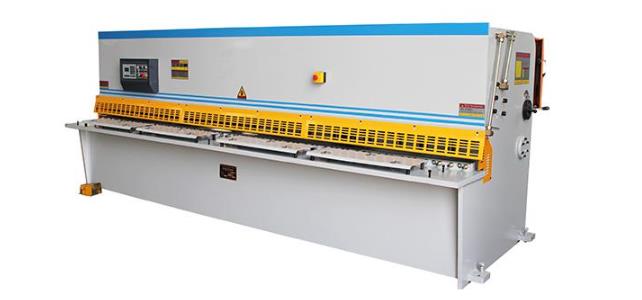
Hydraulic Shearing Machine Price: What USD 8,000 to 25,000 Really Buys
Quick answer: the average price of a hydraulic shearing machine is roughly USD 8,000–25,000 for a standard 6 mm × 3200 mm guillotine shear. Light-duty 3–4 mm models start near USD 6,000, while heavy 20–40 mm machines exceed USD 60,000. This guide breaks down exactly what drives the hydraulic shearing machine cost — cutting thickness, cutting length, motor power and control system — so you can tell whether a quotation is fair before you sign.
Hydraulic Shearing Machine Price at a Glance
The table below is the fastest way to benchmark a quotation. Prices are typical export prices in USD for a hydraulic guillotine shear, and they move mainly with cutting capacity and control type.
| Cutting capacity | Typical price (USD) | Motor power (reference) | Typical applications |
|---|---|---|---|
| 3–4 mm light-duty | from ~6,000 | 4–5.5 kW | Light sheet metal, duct fittings, signage |
| 6 mm × 3200 mm (QC11Y/A-6×3200) | 8,000–15,000 | 7.5 kW | HVAC ductwork, signage, general light fabrication |
| 12–16 mm | 18,000–30,000 | 15–22 kW | Structural plate, heavy fabrication, machinery frames |
| 20 mm × 4000 mm (QC11Y/A-20×4000) | 30,000–45,000 (2–3× a 6 mm machine) | 30 kW | Heavy plate cutting, steel service centers |
| 25–40 mm heavy industrial | 45,000+ (often 60,000+) | 30 kW and above | Shipbuilding, heavy machinery, pressure vessels |
What Drives the Average Price of a Hydraulic Shearing Machine?
Three variables set the average price of a hydraulic shearing machine: cutting thickness, cutting length and control system. Price scales almost linearly with the cross-section of steel the machine must sever, because the frame, hydraulic cylinders and blade holder all grow with the cutting force required.
A 6 mm × 3200 mm guillotine shear sits in the entry-to-mid tier. A 40 mm × 2500 mm machine is a heavy industrial asset. When you compare quotations, always normalize on these three parameters first — otherwise a "cheap" price is usually a smaller machine in disguise.
How Cutting Thickness and Length Change the Price
Thickness and length both increase shear force, and shear force drives structural mass. On the QC11Y series from JIUYING, the QC11Y/A-6×3200 uses a 7.5 kW motor and a 0.5–1.5° shear angle, while the QC11Y/A-20×4000 requires a 30 kW motor and a 0.5–3° shear angle to cut the same steel at 450 N/mm² tensile strength.
That jump from 7.5 kW to 30 kW — plus a heavier frame and a larger backgauge — is the single biggest reason the hydraulic guillotine shear price moves between tiers. If you want a detailed model-by-model comparison, see JIUYING hydraulic shearing machines.

What Does a Standard 6 mm × 3200 mm Machine Cost?
A standard 6 mm × 3200 mm hydraulic guillotine shear typically costs USD 8,000–15,000, depending on the control system and blade material. This class covers most HVAC ductwork, signage and light fabrication work.
The QC11Y/A-6×3200 delivers 13–22 strokes per minute, a 500 mm backgauge distance and a 130 mm throat depth — specifications built for continuous production rather than occasional cutting. Buyers who add CNC backgauge positioning or a motorized blade gap should budget toward the upper end of that band.
Why Do Quotations for the Same Specification Differ So Much?
Quotations for the same specification can differ by up to 40 percent, because machine builders vary in frame rigidity, hydraulic component quality and after-sales support. Two shears rated at 6 mm × 3200 mm are not the same machine when one uses a welded, stress-relieved frame with branded hydraulics and the other uses a lighter fabricated frame.
The practical filter is to compare four numbers side by side:
Motor power (kW) — the clearest indicator of real cutting capacity
Shear angle range (degrees) — affects cut quality and distortion
Strokes per minute — affects throughput and cycle time
Backgauge travel (mm) — affects the maximum sheet size you can run
Then confirm the supplier's service response time. JIUYING publishes full parameter tables for every model, which makes this comparison straightforward.
Should You Buy a Standalone Shear or a Full Production Line?
Buy a standalone shear when cutting is a discrete operation. Buy a full line when shearing feeds downstream processes. Many buyers of JIUYING equipment start with a single QC11Y series shear and later add a WC67Y series press brake, a W11 series plate rolling machine or a Q35Y series ironworker from the same supplier to reduce coordination cost.
For higher output, JIUYING supplies automated lines covering feeding, stamping and packaging, and has delivered a stamping production line project in Russia. Using one supplier across several machines simplifies spare parts and technical support — a factor that often matters more than a few percent on the purchase price.
How to Budget Realistically for a Shearing Machine
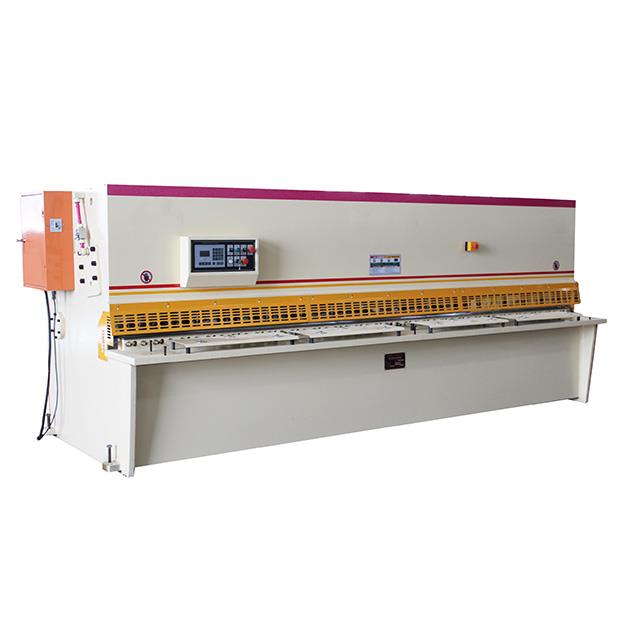
USD 8,000–15,000 — 6 mm × 3200 mm hydraulic guillotine shear
USD 18,000–30,000 — 12–16 mm capacity
USD 45,000+ — 25–40 mm machines (heavy 20–40 mm models often exceed USD 60,000)
Add-on budget — CNC backgauge, motorized blade gap, special blade material, and shipping/installation
Always request a parameter sheet listing motor power, shear angle, stroke rate and backgauge travel, then verify the supplier's export record and service terms before signing. For a specification-matched quotation, contact JIUYING through https://www.weldcnc.com/ with your material grade, thickness and cut length.
Frequently Asked Questions
How much does a hydraulic shearing machine cost?
A hydraulic shearing machine costs roughly USD 8,000–25,000 for standard 6 mm capacity, with light 3–4 mm machines near USD 6,000 and heavy 25–40 mm machines above USD 45,000. Cutting thickness, cutting length, motor power and control system are the four variables that move a hydraulic shearing machine quotation most.
What is the price difference between a 6 mm and a 20 mm shearing machine?
A 20 mm hydraulic shearing machine typically costs two to three times a 6 mm machine. The QC11Y/A-6×3200 uses a 7.5 kW motor, while the QC11Y/A-20×4000 needs 30 kW plus a heavier frame and a larger backgauge. That structural and hydraulic step-up explains most of the price gap between thickness tiers.
Is a CNC hydraulic shearing machine worth the extra cost?
A CNC hydraulic shearing machine is worth the extra cost when repeatability and setup speed matter. CNC backgauge positioning cuts changeover time and reduces scrap on multi-batch work, which usually pays back within months on production runs. For one-off or low-volume cutting, a manual backgauge hydraulic shearing machine is the more economical choice.
Which shearing machine size should a small fabrication shop buy?
Most small fabrication shops should buy a 6 mm × 3200 mm hydraulic shearing machine, which covers typical sheet gauges and standard 8-foot sheets. The QC11Y/A-6×3200 offers 13–22 strokes per minute and a 500 mm backgauge. Shops cutting thicker plate regularly should step up to the QC11Y/A-12×3200 instead.
Does cutting length affect the price as much as cutting thickness?
Both matter, but thickness usually dominates. Increasing thickness raises cutting force exponentially, which drives frame mass and motor power. Increasing length raises total force linearly and adds backgauge and blade length, so a 6 mm × 4000 mm machine costs noticeably more than a 6 mm × 3200 mm unit, but far less than a 20 mm machine.
CATEGORIES
News
Contact Us
Tel:0086-13394110095
Fax:0086-411-39015062
Phone:0086-13394110095
Email:liu@weldcnc.com
Add:20# Ganwan Street, Zhongshan District, Dalian City, China